Why Undisclosed AI Is Destroying Trust, Engagement, and Marketing ROI
Undisclosed AI is eroding consumer trust and engagement on social media. Learn how misleading AI practices are impacting campaigns and what marketers must do to rebuild authenticity, engagement, and trust.
Why Undisclosed AI Is Destroying Trust, Engagement, and Marketing ROI
Artificial intelligence is unquestionably one of the most powerful tools in modern marketing. It helps us scale personalization, streamline creative workflows, and optimize campaigns at enormous scale.
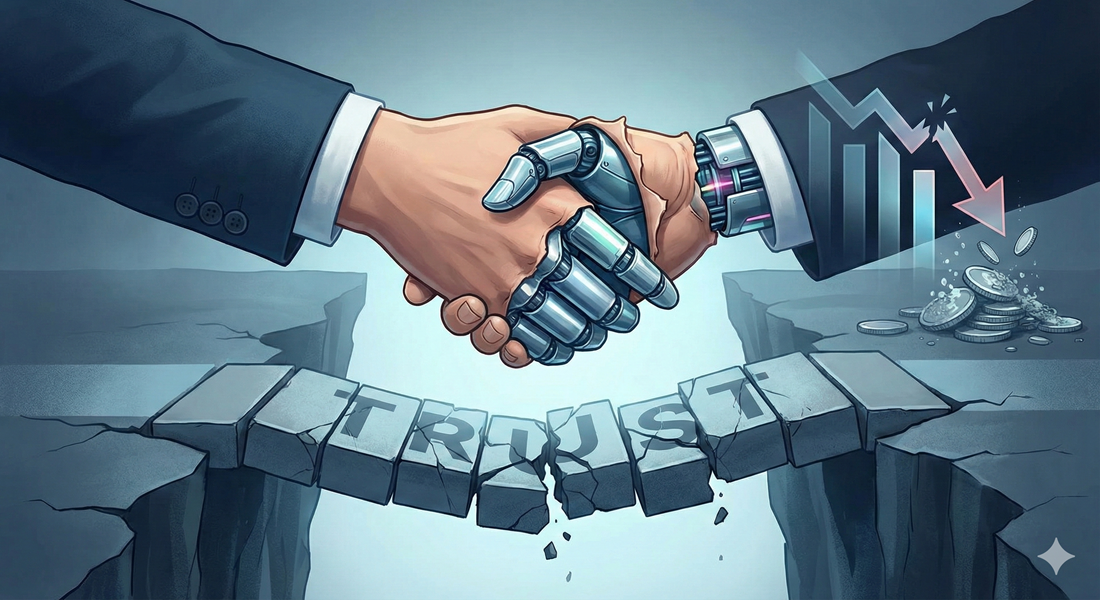
But the facts are undeniable: the misleading use of AI and undisclosed generative content is damaging brand trust, weakening campaign performance, and turning audiences off social media entirely.
And this is not theory, it is already happening.
The Trust Crisis: People Don’t Believe What They See Online
A major global study surveying nearly 50,000 people across 47 countries found less than half (46%) of users are willing to trust AI, even as adoption grows, with 66% reporting regular use but deep skepticism about reliability and trustworthiness.
In the U.S., a representative poll found only 41% of online content is perceived as accurate and human-created, while 23% is viewed as actively false or misleading. Even worse, 78% of people said differentiating real from fake online is harder than ever.
We’re at a point where people expect deception by default, and that’s a marketer’s nightmare.
Undisclosed AI Is a Key Driver of Distrust
When brands or creators use AI without disclosure, audiences feel tricked rather than served. They engage less, click less, and increasingly scroll past entire feeds they once cared about.
Academic evidence shows this in action:
Research on AI disclosure in social media content shows that transparency often reduces engagement metrics like likes and shares; not necessarily because the content is lower quality, but because disclosure signals reduced effort, weakening the emotional bond between creator and audience.
Studies examining the effect of AI involvement in advertising show that when consumers know content was created by AI, their perceived value and purchase intent drop.
In short: people don’t want to be marketed to by machines in disguise. They want to be communicated with by humans they trust.
Engagement With AI Content Is Down
Social platforms, once engines of authentic engagement, are now struggling under the weight of AI noise: from bots and fake reviews to deepfake videos and spammy posts.
A recent article highlighted that undisclosed AI-generated content and bots flooding social feeds are directly undermining user trust, with audiences turning to creators they already trust as filters for credibility.
This goes beyond academic theory:
In October 2025, the brand Aerie posted a simple commitment -“No AI, 100% real” - and it became the brand’s most liked Instagram post of the year, boosting engagement by ~75% over two weeks.
That’s proof of concept: audiences are hungry for authenticity, and traditional marketing told through AI alone is not delivering it.
Marketing Campaigns Are Feeling the Impact
When AI content isn’t flagged, disclosed, or framed properly, it backfires on the very goals brands chase.
1. Emotional connections weaken.
Studies strongly suggest that AI-generated ads can reduce trust and emotional attachment even if they initially increase loyalty metrics; a dangerous trade-off for long-term brand health.
2. Perceived authenticity matters.
Academic work reveals that while transparency might lower short-term engagement, perceived authenticity over time builds deeper trust; the currency of sustainable marketing.
3. Consumers reject impersonal content.
Research in social science finds that people often avoid brands that use generative AI images over real images, especially for emotionally engaging products.
4. False content fuels skepticism.
From deepfake scams exploiting celebrity likenesses to misleading “AI slop” product ads clogging feeds, users are being burned, and social platforms aren’t immune.
The Psychological Toll on Audiences
AI isn’t just confusing algorithms; it’s reshaping how humans perceive online communication.
Research shows that even minimal AI use undermines social signals, making audiences more skeptical and less likely to form real emotional bonds with content and brands.
This is critical: marketing isn’t just about impressions and clicks anymore, it’s about relationships. When the perception of authenticity goes missing, so does the audience’s willingness to believe, engage, and convert.
So Why Do Brands Still Hide AI Use?
Many companies assume non-disclosure gives them competitive advantage: faster, cheaper content that outperforms old creative models.
But that short-term logic misses the broader trend: undisclosed AI erodes trust faster than it can deliver efficiency.
There’s also a concept in marketing called AI washing (akin to greenwashing) where brands exaggerate or misuse AI terminology to appear cutting-edge without meaningful value.
This doesn’t just mislead consumers, it muddies the entire category.
When everything claims AI, nothing feels real.
What Brands Should Do
The question isn’t whether to use AI. It’s how.
If your audience suspects deception, engagement drops, and reputation erodes. If your content feels hollow or inorganic, channels like social media will simply stop rewarding you with attention.
Here’s how companies should move forward:
1. Always disclose AI use clearly and upfront.
View transparency as a feature, not a liability. Be honest about when AI helps create content: whether for ads, images, captions, or automated responses.
Transparency may lower vanity metrics today, but it strengthens long-term credibility, the true driver of ROI.
2. Combine AI with human creativity and oversight.
People don’t want cold automation.
They want human-centered storytelling enhanced by AI capabilities. Use AI to amplify human insight, not replace it.
3. Invest in authenticity signals.
Highlight real experiences, human voices, testimonials, and stories behind your brand.
Empathy, transparency, and real effort outperform slick, invisible AI in the long term.
4. Educate your audience about AI responsibly.
The more people understand what AI is and isn’t, the less likely they are to feel tricked and the more likely they are to choose brands they trust.
Trust Is the New Metric That Matters
Nowadays, audiences are no longer impressed by AI-generated perfection.
They are jaded by it.
Social media users want honest communication, real human voices, and brands that respect their intelligence.
Undisclosed AI doesn’t just compromise a campaign; it compromises trust, weakens emotional bonds, and accelerates disengagement.
Hiding the use of AI, avoiding watermarks, or failing to disclose when content is generated by artificial intelligence actively damages the user experience, erodes online trust, and undermines the credibility of digital content.
When people feel deceived, they disengage.
If brands want trust back, they must stop misleading their audiences.
Transparency and disclosure are no longer optional.
They are the foundation for restoring credibility and meaningful engagement.
Ready to become a founding member?
Apply for certification todayFree AI tools
Assess your AI readiness
Use these quick assessments to spot trust, governance, and disclosure gaps.