How to Answer AI Governance Questions on a Vendor Security Questionnaire
A security questionnaire just landed in your inbox. This year, it has questions about AI governance that were not on last year's version.
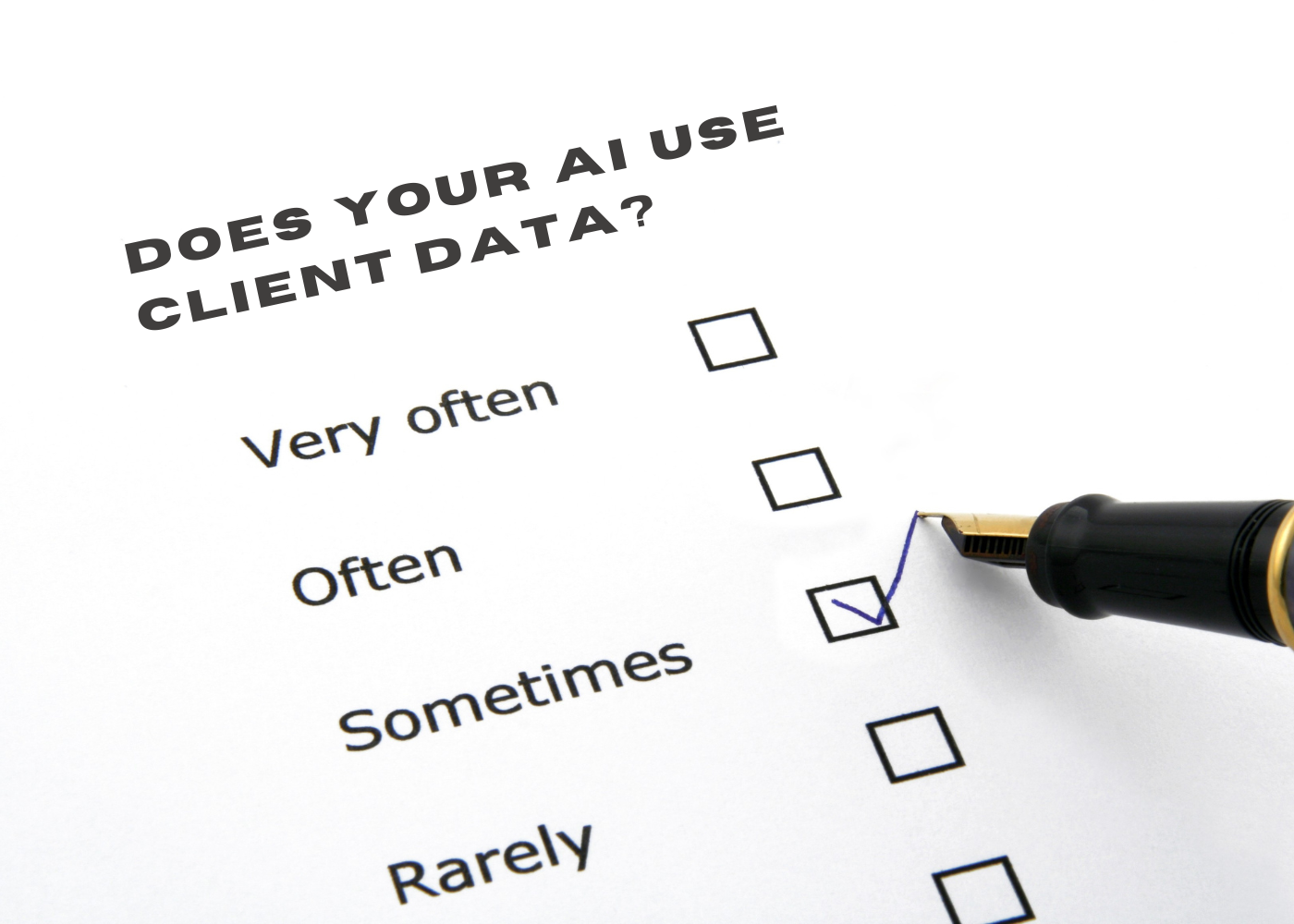
A vendor security questionnaire is a structured set of questions a buyer sends to a supplier to evaluate that supplier's security and risk posture before granting access to systems, data, or contracts. The buyer uses the responses to decide whether the vendor meets internal security standards and any regulatory obligations the buyer carries. Questionnaires are standard practice in technology, financial services, healthcare, and any sector where the vendor will handle sensitive data.
In 2026, those questionnaires include a section that did not exist a few years ago. Buyers now ask vendors where AI is used in their product, what data trains the underlying models, how outputs are tested for accuracy and bias, and what happens when AI behaves in ways the vendor did not intend. The questions are driven by a chain of pressure. Buyers ask their vendors because their own customers, regulators, and boards now ask the buyer.
The AI section is the hardest part of the modern questionnaire to answer. The questions are new. The documentation is rarely centralized. The people who can answer them sit across legal, security, product, and engineering. A weak response slows the deal. A specific response moves it forward.
This guide covers the five AI governance questions buyers actually ask in 2026, sample answers that win deals, and how independent certification can collapse most of the response work into a single registry link.
You just got an AI governance question on a security questionnaire. Now what.
AI governance is the framework of policies, procedures, and accountability structures that manage how a company develops, deploys, and monitors AI systems. It covers who owns AI decisions, how those decisions are documented, and what happens when something goes wrong.
This year, security questionnaires have three to eight questions about AI governance that weren't there before - yet Deloitte found only 1 in 5 companies have mature AI governance models. And if you're the one who needs to deliver this key information to a stakeholder or a client, there's a deal waiting on your response.
Below, we'll cover the questions buyers actually ask, sample answers that win deals, and how to make this faster on every future questionnaire.
The five AI governance questions almost every buyer now asks
Across SIG, CAIQ, and custom enterprise questionnaires in 2026, the same five categories keep appearing. The wording varies, but the underlying concerns are consistent.
Where and how you use AI in your product
Buyers want a clean inventory of every AI touchpoint in your product. They're looking for specifics: which features use AI, what type of AI, and whether it's built in-house or sourced from a third party.
Vague answers signal you haven't mapped your own AI surface area. That raises red flags immediately.
What data trains or powers your AI
This question kills more deals than any other when answered poorly. Buyers want to know if their data ends up training your models.
They also want clarity on data retention, consent mechanisms, and opt-out processes. Depending on your industry, this answer might require an additional aspects covered.
How you test AI for bias, errors, and drift
Buyers want evidence of process, not assurance of outcomes. Saying "we are committed to fairness" tells them nothing.
Describing your testing cadence, evaluation metrics, and remediation workflow gives them far better view and assurance.
What happens when AI gets it wrong
Things can go wrong, and with 233 AI incidents recorded in 2024 per Stanford HAI's AI Index, it happens more often than most teams expect. McKinsey reports 80% of organizations have encountered risky behavior from AI agents. Buyers want a real incident response plan. They want to know who gets notified, how quickly, and what the escalation path looks like.
A paragraph about how seriously you take AI safety doesn't answer the question. Specifics do.
How you govern third-party AI tools you depend on
Buyers want to know your vendors' AI is also under control. "We use OpenAI" is not a complete answer.
They want to see your vendor review process, your sub-processor list, and your contractual controls. To the buyer, your vendors' AI is your AI.
Sample answers buyers accept
The difference between a weak answer and a strong answer is specificity. Weak answers state principles. Strong answers name controls, owners, documents, and evidence.
Sample answer: Where and how you use AI
Question buyers ask: "Please describe all AI and machine learning capabilities used in your product, including third-party services."
Bad answer: "We use AI to enhance our product and improve user experience. Our AI features are designed with security in mind."
Strong answer that wins deals: "Our product uses AI in three areas: (1) a recommendation engine built on a proprietary model trained on anonymized usage patterns, (2) a natural language search feature powered by OpenAI's API, and (3) an automated categorization system using a fine-tuned classification model. Our AI inventory document, attached, lists each capability, its data inputs, and the responsible product owner."
The strong answer gives the buyer a map. They can see exactly where AI lives in your product and who owns it.
Sample answer: What data trains or powers your AI
Question buyers ask: "Is customer data used to train your AI models? If so, please describe the consent mechanism and opt-out process."
Bad answer: "We take data privacy seriously and comply with all applicable regulations."
Strong answer that wins deals: "Customer data is not used to train our proprietary models. Our recommendation engine is trained on anonymized, aggregated usage data that cannot be linked to individual customers. For our OpenAI integration, we have a zero-data-retention agreement in place. Our data processing addendum, attached, documents these controls."
The strong answer addresses the specific concern and provides verifiable evidence.
Sample answer: How you test AI for bias and errors
Question buyers ask: "Describe your process for evaluating AI model outputs for accuracy, bias, and drift over time."
Bad answer: "We regularly monitor our AI systems to ensure they perform as expected."
Strong answer that wins deals: "We evaluate model performance quarterly using a standardized test suite that measures accuracy, false positive rates, and demographic parity across protected categories. Our ML engineering team reviews results and documents any drift exceeding our 5% threshold. Remediation actions are tracked in our model governance log. Our most recent evaluation report is attached."
The strong answer describes a repeatable process with specific metrics and documentation.
Sample answer: What happens when AI gets it wrong
Question buyers ask: "Describe your incident response process for AI-related failures, including hallucinations, harmful outputs, or model errors."
Common answer that loses deals: "We have robust processes in place to address any issues that arise with our AI systems."
Bad answer: "AI-related incidents follow our standard incident response process with AI-specific additions. Users can report AI errors through an in-app feedback button. Reports are triaged within 4 hours by our ML engineering team. Severity 1 incidents trigger immediate model rollback and executive notification. All incidents are logged with root cause analysis completed within 5 business days. Our AI incident response runbook is attached."
The strong answer shows a real process with real timelines and real accountability.
Sample answer: How you govern third-party AI tools
Question buyers ask: "List all third-party AI services used to deliver your product and describe how each is reviewed for security and governance."
Bad answer: "We carefully vet all our vendors and only work with reputable providers."
Strong answer that wins deals: "We use three third-party AI services: OpenAI (natural language processing), AWS Rekognition (image analysis), and Pinecone (vector search). Each vendor completed our AI vendor assessment, which evaluates data handling, model governance, and incident response capabilities. We maintain zero-data-retention agreements with OpenAI and AWS. Our AI sub-processor list and vendor assessment summaries are attached."
The strong answer names the vendors, describes the review process, and provides documentation.
How to build your own answers in under an hour
If you're starting from scratch, here's the workflow that gets you to a defensible answer quickly.
1. Inventory every place AI touches your product
Walk every feature. Include third-party APIs like OpenAI, Anthropic, or embedded vendor AI. Include internal tools your team uses.
If it generates, summarizes, classifies, ranks, or decides, list it. This inventory becomes the foundation for every AI governance answer you write.
2. Pull the question apart and map it to what you already have
Most questionnaire questions are actually three or four questions bundled together. Break them apart.
For each part, identify which existing document covers it:
Security policy: covers data protection and access controls
Privacy notice: covers data collection and consent
Sub-processor list: covers third-party vendors
Model card: covers model behavior and limitations
If nothing covers a particular ask, that gap becomes a follow-up action.
3. Write the answer in plain language with specifics
Avoid principle-language like "we are committed to responsible AI." Use control-language instead: what you do, who does it, how often, and how you would prove it.
If you can't prove your AI claims, don't make them. Buyers will ask for evidence.
4. Attach evidence the buyer can verify without calling you
Attach the actual policy, the sub-processor list, and any certification badge with a public registry link. Self-attestations carry less weight than third-party-verifiable evidence.
A SiteTrust certification, for example, links to a public registry where buyers can verify your AI transparency status in seconds. That kind of evidence moves deals forward.
5. Get a 15-minute review from legal, security, and product
Three reviewers, fifteen minutes each. Legal flags compliance overreach. Security validates technical claims. Product confirms feature accuracy.
If the answer can't survive this review, it can't survive the buyer's procurement team.
Frameworks worth citing in your answers
You don't need deep expertise in every AI framework. You do need to know which name to drop in which context.
| Framework | Best cited when | What it signals to buyers |
|---|---|---|
| NIST AI Risk Management Framework | Describing your risk assessment process | You follow the leading U.S. government standard |
| ISO 42001 | Demonstrating formal AI management systems | You've invested in auditable AI governance |
| EU AI Act | Serving European customers or handling high-risk AI | You understand regulatory requirements |
| Colorado AI Act | Serving U.S. customers with algorithmic decision-making | You're ahead of state-level compliance |
| OECD AI Principles | Describing your ethical commitments | You align with international consensus |
Cite frameworks when they're relevant to your actual practices, and track emerging state laws like California's AI disclosure requirements that may apply to your customer base. Don't cite frameworks you haven't actually implemented.
How independent certification cuts your questionnaire time
Here's the math. A typical mid-market security questionnaire takes 4 to 8 hours of combined sales engineering, security, and legal time. Companies receive 5 to 20 of these per quarter. That adds up to significant time spent on questionnaire response.
Independent third-party certification with a public registry collapses the AI governance section of every future questionnaire into one link. The buyer verifies in seconds. The seller stops writing the answer from scratch every time.
SiteTrust certification works this way. Your AI transparency practices are independently evaluated, and your certification status is listed in a public registry. When a buyer asks about AI governance, you provide the registry link. They verify your status without a phone call, and you move on to closing the deal.
Get certified for AI transparency with SiteTrust.
Mistakes that lose deals
Five patterns show up repeatedly in failed questionnaire responses:
Leaving any AI governance question blank or marked "N/A" without explanation. Procurement reads silence as either negligence or evasion.
Answering with principles instead of controls. "We take AI safety seriously" gives the buyer nothing to verify.
Claiming a certification or framework alignment without attaching the evidence. Savvy buyers ask for the artifact, and a missing artifact ends the conversation.
Giving inconsistent answers across questionnaires from different buyers. Procurement teams in the same vertical compare notes.
Treating third-party AI tools as out of scope. To the buyer, your vendors' AI is your AI.
Frequently asked questions
How is AI governance different from AI compliance?
Governance is the internal system you build to manage AI well. Compliance is meeting specific external rules.
A company can be compliant with no real governance. However, mature companies use governance as the foundation that makes compliance routine.
Do I need a separate AI policy if I already have a security policy?
Yes. Security policies cover confidentiality, integrity, and availability. A dedicated internal AI policy addresses new categories of risk like bias, drift, hallucination, and explainability that traditional security policies weren't written to address.
What if my company only uses third-party AI tools and doesn't build its own?
You're still on the hook. The buyer asking the questionnaire holds the contract holder responsible for AI in the product, regardless of who built the underlying model.
Treat third-party AI tools as part of your governance scope.
How often do I update my standard AI governance answers?
Quarterly at minimum. Update immediately when you add a new AI feature, switch a major AI vendor, or when a regulation that applies to you changes status.
Can independent certification replace answering questionnaire questions altogether?
Not entirely, but it replaces most of the burden. Buyers still want their specific questionnaire completed.
However, a registry-verifiable certification often satisfies the underlying ask in one link, turning a six-hour exercise into a fifteen-minute one.
Ready to become a founding member?
Apply for certification todayFree AI tools
Assess your AI readiness
Use these quick assessments to spot trust, governance, and disclosure gaps.