What is Global Privacy Control, and does your website honor it?
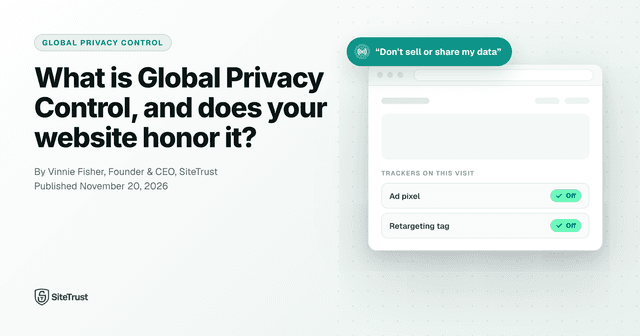
Some visitors' browsers send a signal that says 'don't sell or share my data.' California is moving to make sure websites act on it before trackers load. Here is what that means for your site.
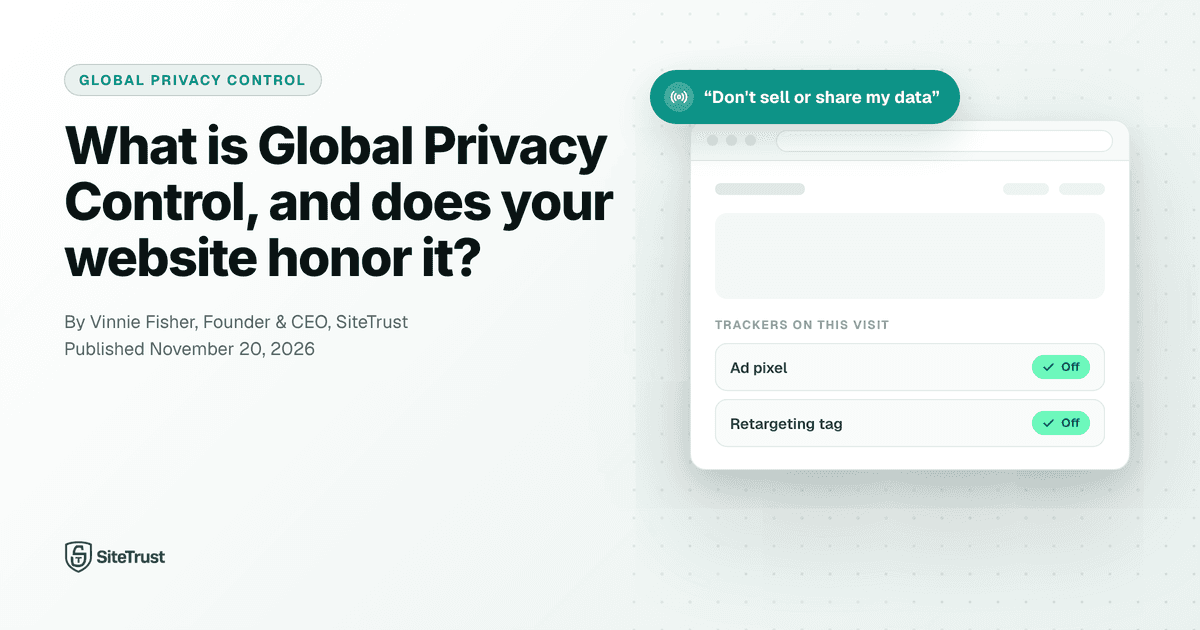
Global Privacy Control is a signal a visitor's browser sends that says "don't sell or share my data." Businesses covered by California's privacy law already have to honor it. On November 6, 2026, California's privacy agency advanced rules that would make the timing explicit: honor the signal before trackers load, not after.
By Vinnie Fisher, Founder & CEO, SiteTrust · Published November 20, 2026
What is Global Privacy Control?
Global Privacy Control, or GPC, is a setting in some browsers and browser extensions. When a visitor turns it on, their browser tells every site they visit, in the background, that they opt out of having their data sold or shared.
The visitor never clicks a banner. They set it once, and it goes with them everywhere. Your website either listens for it or it doesn't.
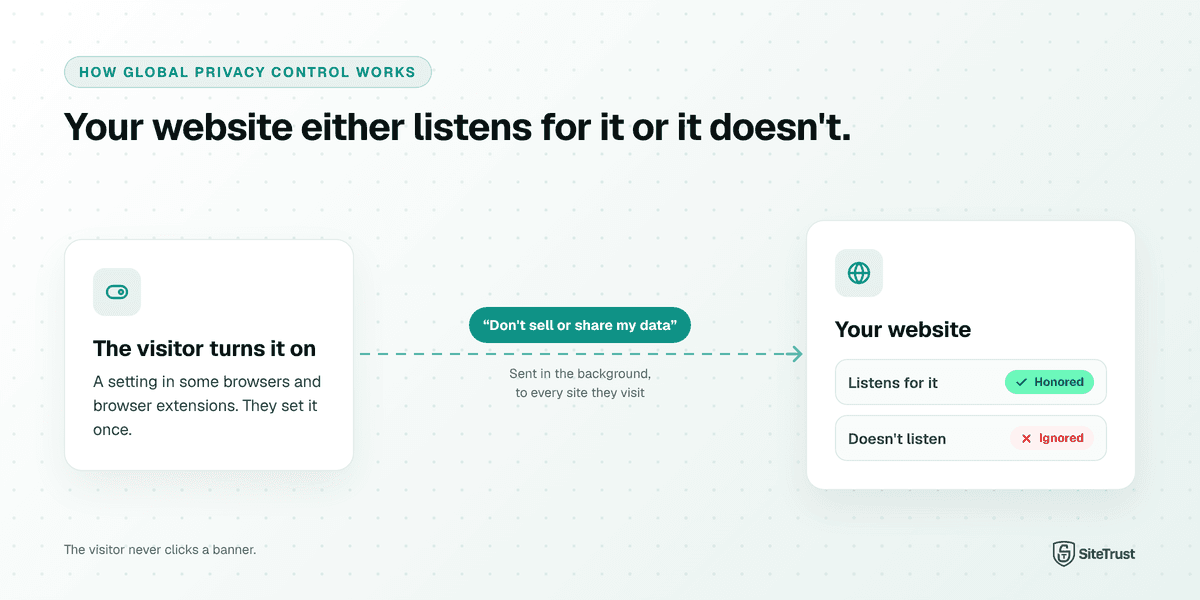
The visitor sets it once, and it goes with them everywhere.
Image file: 02-gpc-how-it-works.png Alt text: Diagram: a visitor turns on Global Privacy Control once, their browser sends "Don't sell or share my data" to every site they visit, and each website either honors the signal or ignores it
Do websites have to honor it?
For businesses covered by the California Consumer Privacy Act, yes. The CCPA already requires them to honor opt-out preference signals like GPC (Hunton, Nov 10, 2026).
This isn't new or theoretical. In August 2022, the California attorney general's first CCPA settlement, with Sephora, was for $1.2 million, and it included the company's failure to honor GPC signals (Crowell & Moring, Aug 2022).
Whether the CCPA covers your business depends on facts like your size and how you handle data. Your lawyer can tell you. What any owner can check is whether the site reads the signal at all.
What changed on November 6?
On November 6, 2026, the California Privacy Protection Agency voted unanimously to advance proposed amendments on opt-out signals (Hunton, Nov 10, 2026).
The proposal would make the order of events clear: a site would have to honor the signal before it sets cookies or other tracking tools. Letting the trackers fire first and cleaning up later wouldn't count (Wilson Sonsini, Aug 18, 2026).
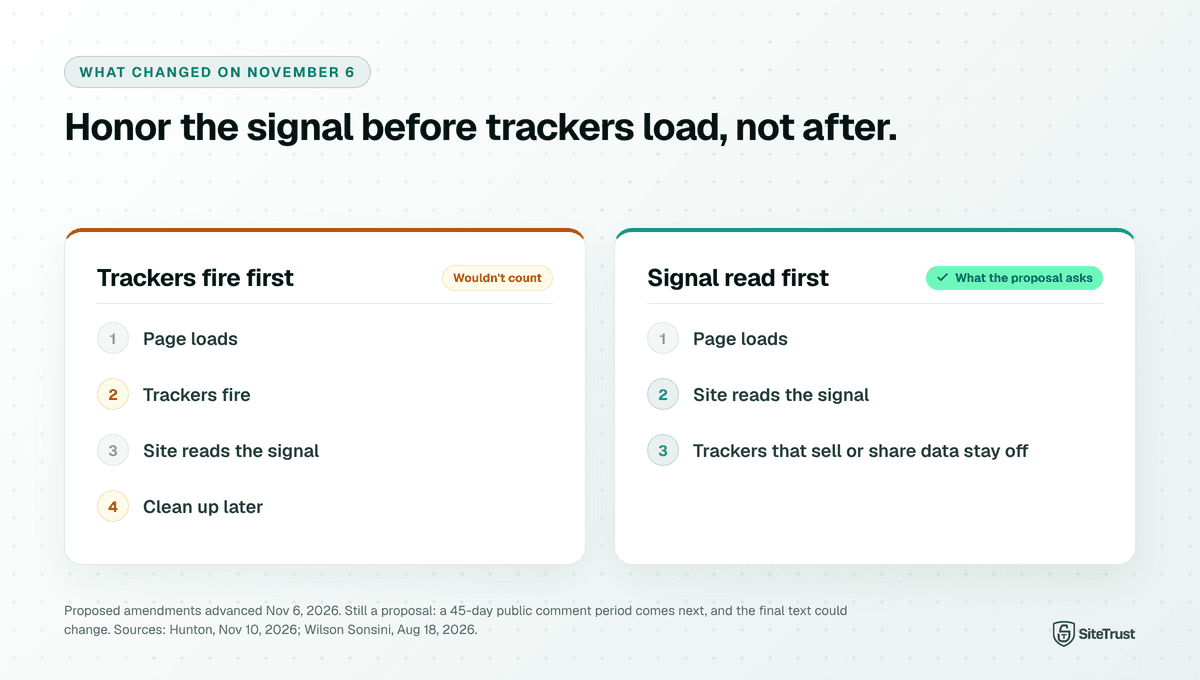
Under the proposal, letting the trackers fire first and cleaning up later wouldn't count.
Image file: 03-gpc-before-trackers-load.png Alt text: Comparison: if trackers fire before the site reads the signal, it wouldn't count under the proposal. If the site reads the signal first, trackers that sell or share data stay off
It is still a proposal. A 45-day public comment period comes next, and the final text could change.
Here's why it matters even as a proposal. It puts the focus where the wiretap suits already put it: on what loads, and when. The order your tags fire in becomes the evidence.
Is this going to get bigger?
Yes. Starting January 1, 2027, California's AB 566 requires browser makers to build an opt-out signal into their browsers (Wilson Sonsini, Aug 18, 2026). Today a visitor has to go looking for GPC. Soon it will be a setting in the browser they already use.
More visitors sending the signal means more visits where your site either honors it or doesn't, and each one leaves a trail.
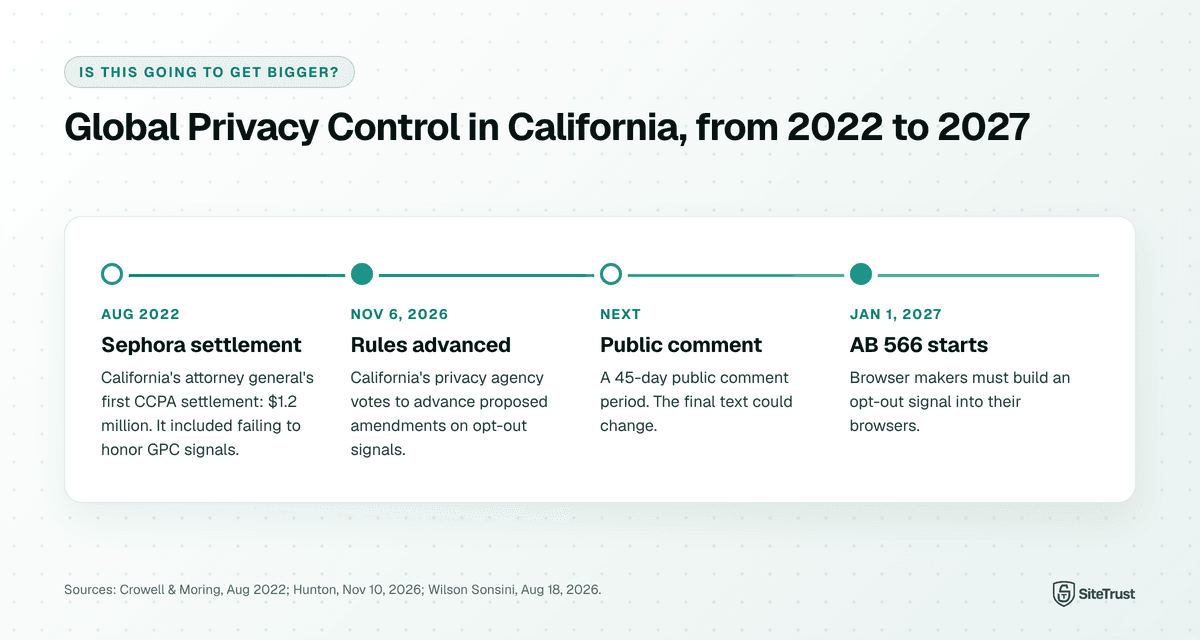
More visitors sending the signal means more visits where your site either honors it or doesn't.
Image file: 04-gpc-timeline.png Alt text: Timeline: Sephora's $1.2 million settlement in August 2022, the vote to advance proposed rules on November 6, 2026, a 45-day public comment period next, and AB 566 starting January 1, 2027
Who should be paying attention?
Any business whose site runs ad pixels, analytics or retargeting tools, especially one with California visitors. That includes most law firms, CPAs, financial advisors, insurance agencies, medical practices and the agencies that build their sites.
If you run ads that follow visitors around the web, your site is probably sharing data in the way these rules are about.
How do you check your own site?
Start with these:
→ Know your trackers. Which pixels and analytics tools load on your site, and which ones share data with ad platforms?
→ Ask about the signal. Ask your web team or consent tool vendor: "Does our site detect Global Privacy Control, and what does it turn off when it sees it?" Get the answer in writing.
→ Check the order. Does anything fire before the site reads the visitor's choice or signal?
→ Keep the record. Can you show what the site did for a visitor who sent the signal, with a date?
The free SiteTrust Scan checks what loads on your site before a visitor makes a choice and what keeps running after they decline. You get a dated summary of what we found.
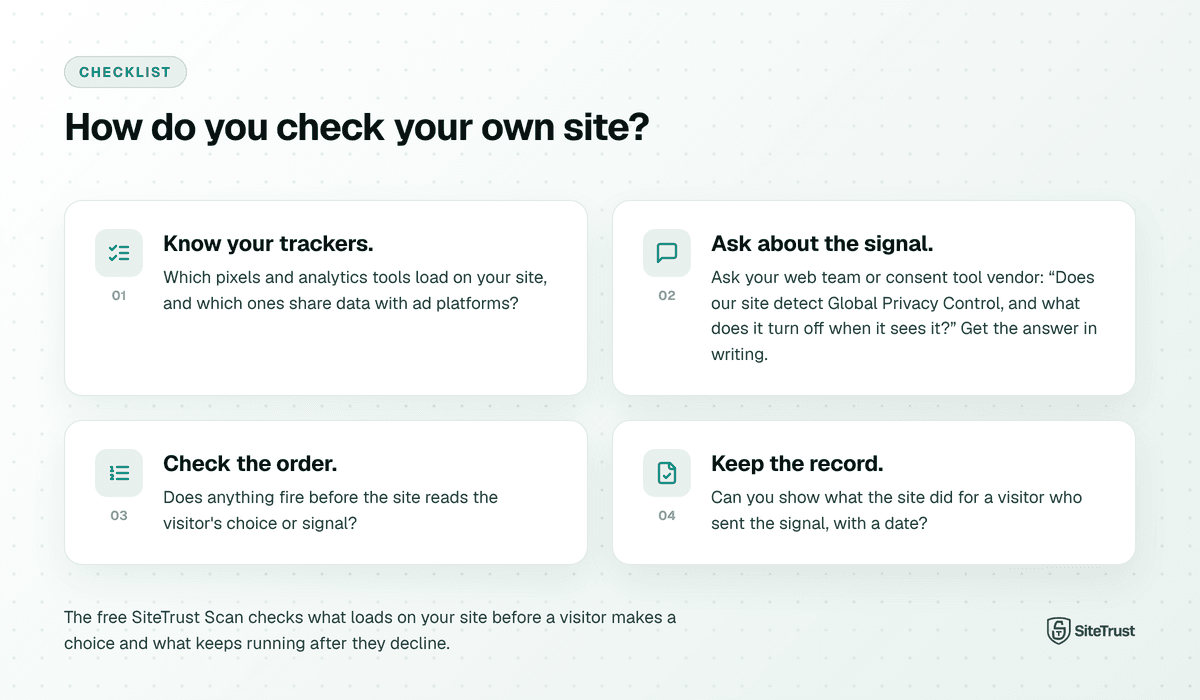
Four checks you can run on your own site, starting today.
Image file: 05-gpc-checklist.png Alt text: Checklist to check your own site: know your trackers, ask about the signal, check the order, keep the record
What does "handled" look like?
Your site reads the signal first. Trackers that sell or share data stay off for that visitor. The banner, the signal and the site's behavior all agree. And if anyone asks how your site treats a visitor who opted out, you have a dated record that shows it.
FAQ
Does my business have to honor Global Privacy Control?
It depends on whether California's privacy law covers your business, and we can't decide that for you. What we can say: covered businesses already have to honor it, and California's regulator is moving to require that it be honored before trackers load. Your lawyer can tell you where you stand.
My site has a cookie banner. Doesn't that handle it?
Not necessarily. GPC arrives before the visitor ever sees your banner. Your consent tool has to detect the signal and act on it, and many sites aren't set up to do that.
Is the November 6 rule final?
No. The agency advanced proposed amendments. A public comment period comes next, and the text could change.
What is AB 566?
A California law that requires browser makers to offer a built-in opt-out signal starting January 1, 2027. It puts the duty on browsers, not websites, but it means more of your visitors will be sending the signal.
Run the free scan
See what your site does before a visitor makes a choice. Run the free scan at sitetrust.com
Hidden risks, handled. SiteTrust, earned. What remains, covered.
Informational only and not legal advice. Sources: California Privacy Protection Agency board vote, Nov 6, 2026 (Hunton Andrews Kurth, Nov 10, 2026); Wilson Sonsini, "CalPrivacy Authorizes Rulemaking on Opt-Out Signals," Aug 18, 2026; California Attorney General settlement with Sephora, Aug 2022 (Crowell & Moring); AB 566, operative Jan 1, 2027 (Wilson Sonsini, Aug 18, 2026).
Ready to become a founding member?
Apply for certification todayFree AI tools
Assess your AI readiness
Use these quick assessments to spot trust, governance, and disclosure gaps.