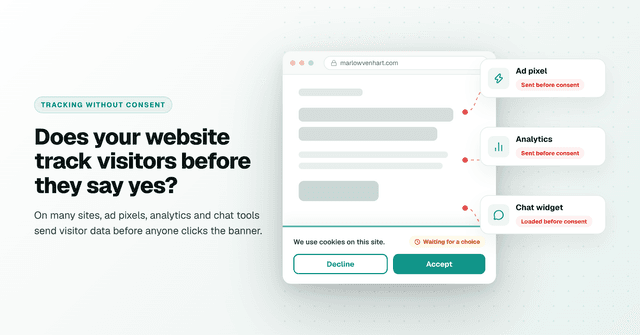
Does your website track visitors before they say yes?
Many business websites track visitors before consent: ad pixels, analytics and chat tools fire before anyone clicks the cookie banner. Under the California Invasion of Privacy Act (CIPA), that can mean $5,000 per violation. Here is what tracking before consent means, why a cookie banner isn’t enough, and how to check your website.
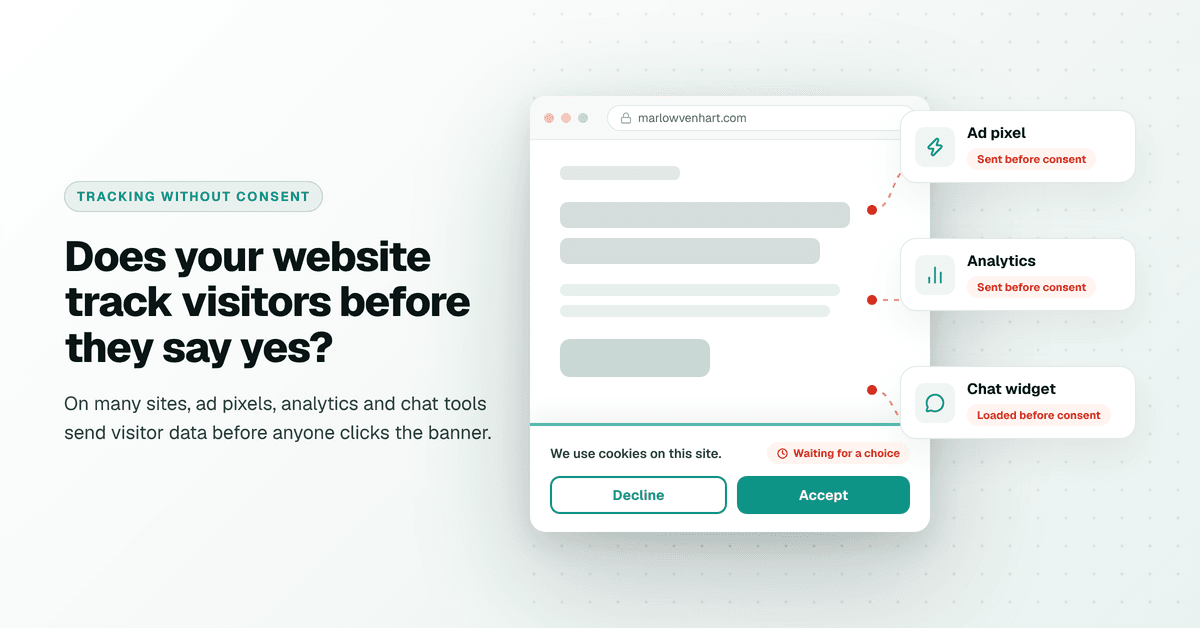
Does your website track visitors before they say yes?
Probably, and you may not know it. Most business websites load ad pixels, analytics and chat tools the moment a page opens, before a visitor clicks anything. In California, plaintiffs' lawyers treat that as wiretapping, with $5,000 per violation in statutory damages. A banner on the page doesn't settle it. What the site actually does decides it.
By Vinnie Fisher, Founder & CEO, SiteTrust · Published November 16, 2026
What does "tracking before consent" actually mean?
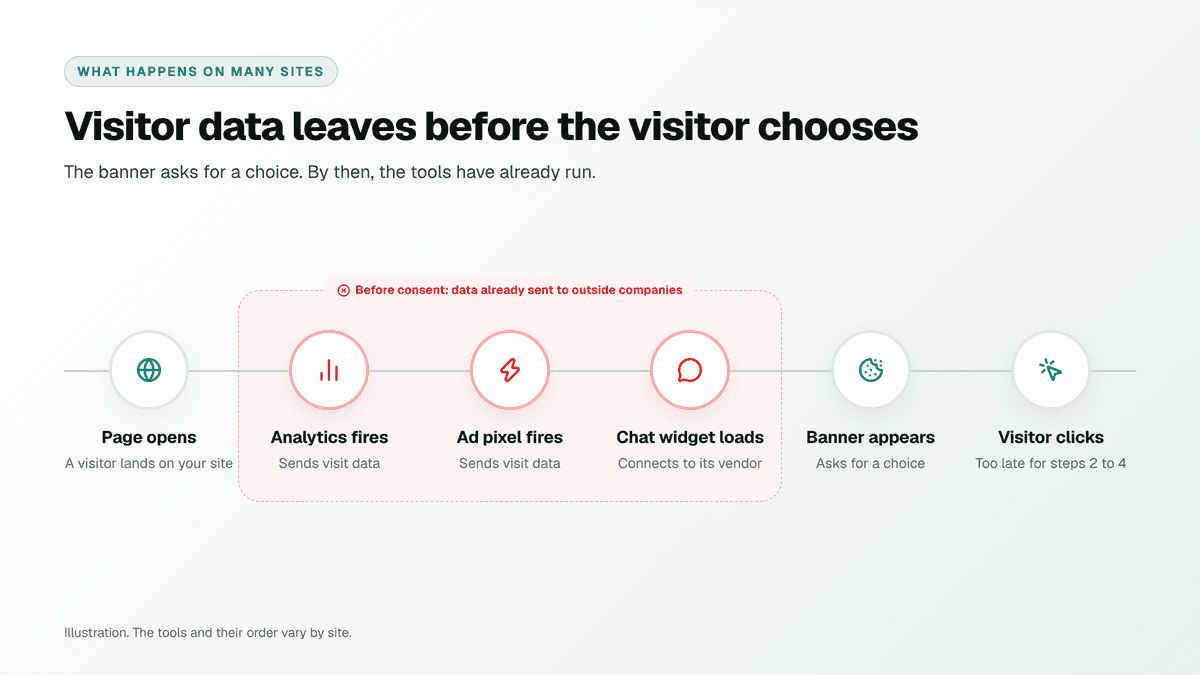
Image 1 · Read left to right: analytics, the ad pixel and the chat widget run (red zone) before the banner even appears, so the visitor's click comes too late. It shows that the problem is the order things happen in.
When someone lands on your site, tools you or your web team added years ago start running: an ad pixel, an analytics script, a chat widget, a scheduling tool. Many of them send that visitor's data to outside companies right away.
If that happens before the visitor has said yes, your site is tracking without consent. Your visitor never sees it. Neither do most owners. It sits in the code, and it has been running every day.
Why is this a risk for a business owner right now?
Because the lawsuits are about what your site does, not what it says.
California's Invasion of Privacy Act allows $5,000 per violation, or three times actual damages (Penal Code 637.2). Plaintiffs' firms have built a steady business around websites whose trackers fire before a visitor agrees.
Two developments make this sharper:
→ A privacy policy is not consent. In Asercion v. Ulta (N.D. Cal., Aug 21, 2026), the court did not accept a privacy policy as the visitor's agreement.
→ California is moving on opt-out signals. On November 6, 2026, the state's privacy agency voted to advance proposed rules that would require businesses to honor a visitor's Global Privacy Control signal before ad tags fire. It is a proposal, with public comment still to come.
You may have heard that a new law ended these suits. Here is what it did. SB 690, signed September 30, 2026, ends private suits under the pen register section (Penal Code 638.51) from January 1, 2027. The core wiretap claims under section 631(a) and the $5,000-per-violation damages are unchanged.
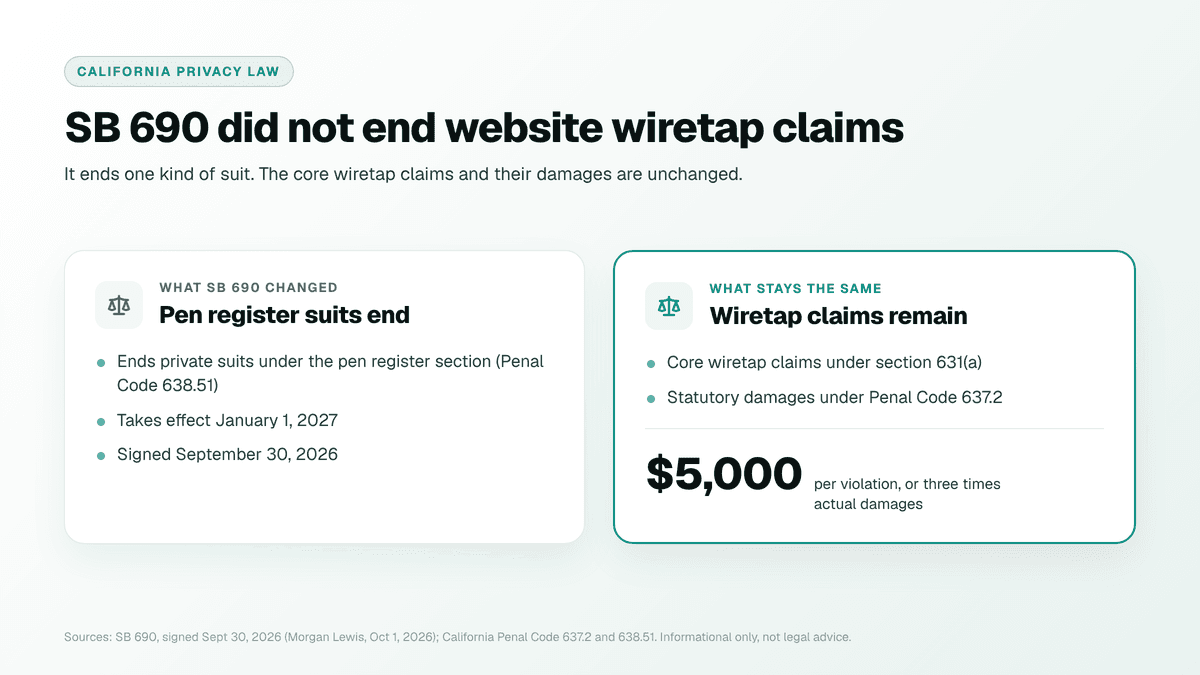
Image 2 · Optional. Left: the one thing SB 690 ended. Right, highlighted: what still applies, including $5,000 per violation. Corrects the "the new law fixed it" belief for readers who skim past the paragraph.
"We already have a cookie banner." Isn't that enough?
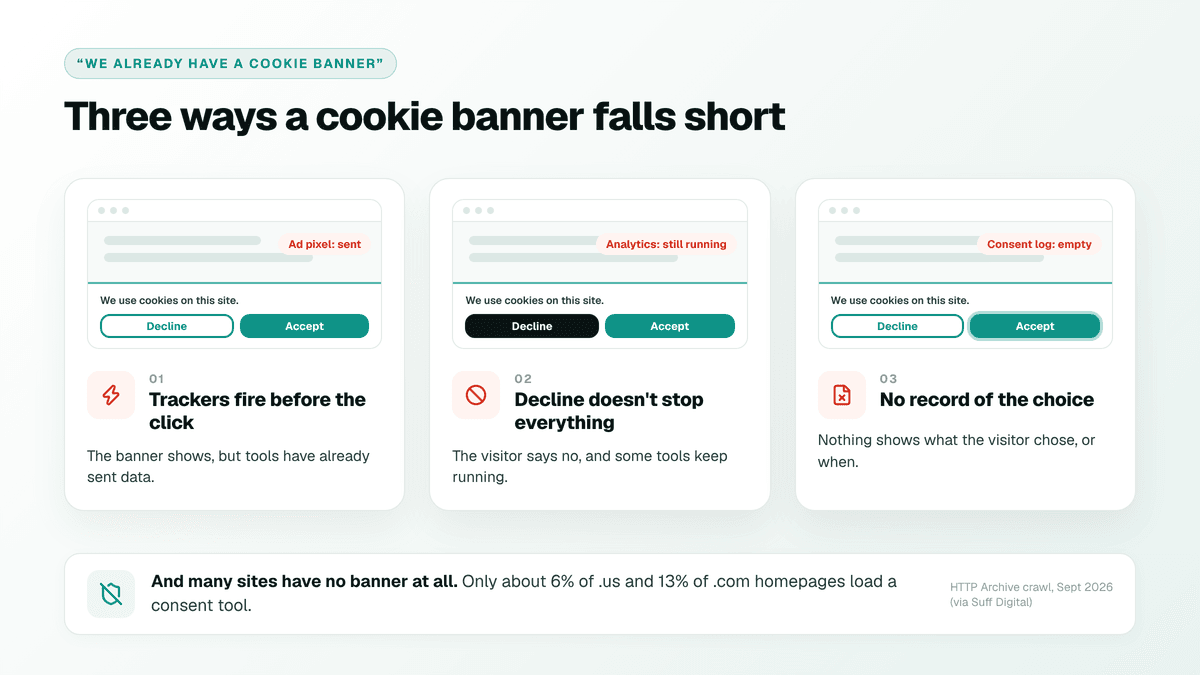
Image 3 · The same banner shown three times, failing a different way each time: trackers fire before the click, Decline doesn't stop everything, no record of the choice. The bottom strip covers sites with no banner at all.
Not always. A banner is a promise. The question is whether the site keeps it.
We see three common problems:
→ The banner shows, but trackers have already fired before the visitor clicks.
→ The visitor clicks "decline," and some tools keep running anyway.
→ No record shows what the visitor chose, or when.
And many sites have no banner at all. A crawl of homepages in September 2026 found that only about 6% of .us homepages and 13% of .com homepages load a consent tool (HTTP Archive, via Suff Digital).
Who should be paying attention?
Anyone whose good name runs through their website. Law firms, CPAs, financial advisors, insurance agencies and medical practices carry the most to lose, because being trusted is the product. If your site has forms, booking, chat or analytics, this applies to you.
I've been a business attorney since 1999. The question that matters has stayed the same: what did you say, and what did you actually do? Your website answers that question every day, whether you're watching or not.
How do you check your own site?
You don't need to read code. Start here:
→ List what loads. Which trackers, pixels and chat tools run on your site, and who added them?
→ Check the order. Does anything fire before a visitor makes a choice?
→ Test "decline." Does saying no actually stop the tools?
→ Keep the proof. Can you show a record of each visitor's choice, with a date?
The free SiteTrust Scan checks your site from the outside: what loads, what fires before consent, what happens after accept and after decline, and whether consent records exist. You get a summary of what we found, dated.
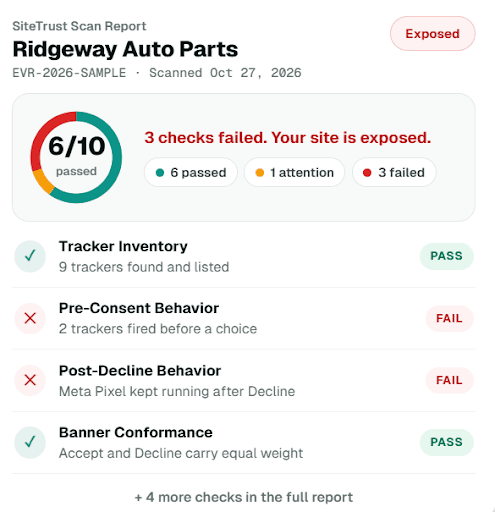
Image 4· A real scan summary from the product (sample or approved domain, never a client's). It shows the reader exactly what they get before we ask them to run the scan.
What does "handled" look like?
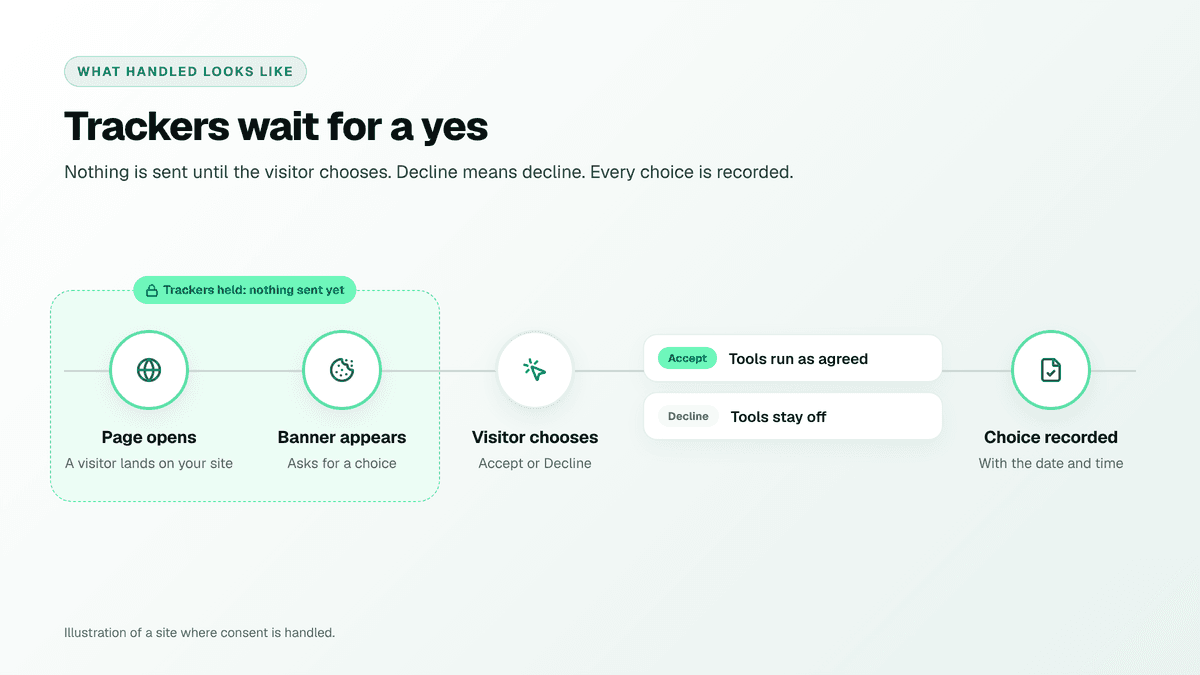
Image 5 · The same timeline as Image 2, fixed: nothing is sent until the visitor chooses, Decline keeps tools off, and every choice is recorded with a date. Green replaces red in the same spot, so the change is obvious.
Trackers wait for a yes. "Decline" means decline. Every choice is recorded. And when a client, a partner or a lawyer asks whether your site respects visitors' choices, you have the record to show them, not a promise.
FAQ
Is tracking before consent illegal? We can't answer that for your site, and no tool can. What we can say: California law allows $5,000 per violation for wiretap claims, and suits over trackers that fire before consent are active. The scan shows what your site actually does, so you and your lawyer can decide.
Did SB 690 end these lawsuits? No. It ends private pen register suits from January 1, 2027. The core wiretap claims under section 631(a), and their $5,000-per-violation damages, are unchanged.
My web agency handles our site. Isn't this their job? They may have added the tools. You carry the exposure. Ask them what the last check found, and when it ran.
Does a privacy policy cover me? A policy says what you do. It isn't the visitor's consent. In Asercion v. Ulta (Aug 2026), the court did not treat a privacy policy as consent.
Run the free scan
See what your site does before a visitor says yes. Run the free scan at sitetrust.com
Hidden risks, handled. SiteTrust, earned. What remains, covered.
Informational only and not legal advice. Sources: California Penal Code 637.2 and 638.51; Asercion v. Ulta, N.D. Cal., Aug 21, 2026 (National Law Review, Aug 24, 2026); SB 690, signed Sept 30, 2026 (Morgan Lewis, Oct 1, 2026); California privacy agency vote, Nov 6, 2026 (Hunton Andrews Kurth, Nov 10, 2026; Covington Inside Privacy); HTTP Archive crawl, Sept 2026 (Suff Digital).
Ready to become a founding member?
Apply for certification todayFree AI tools
Assess your AI readiness
Use these quick assessments to spot trust, governance, and disclosure gaps.