Why Did AI Job Loss Predictions Suddenly Change?
Last year, AI CEOs said jobs were gone. This year, they say everything will be fine. What actually changed? And if you are a company or a job seeker trying to navigate this, what does any of it mean for you?

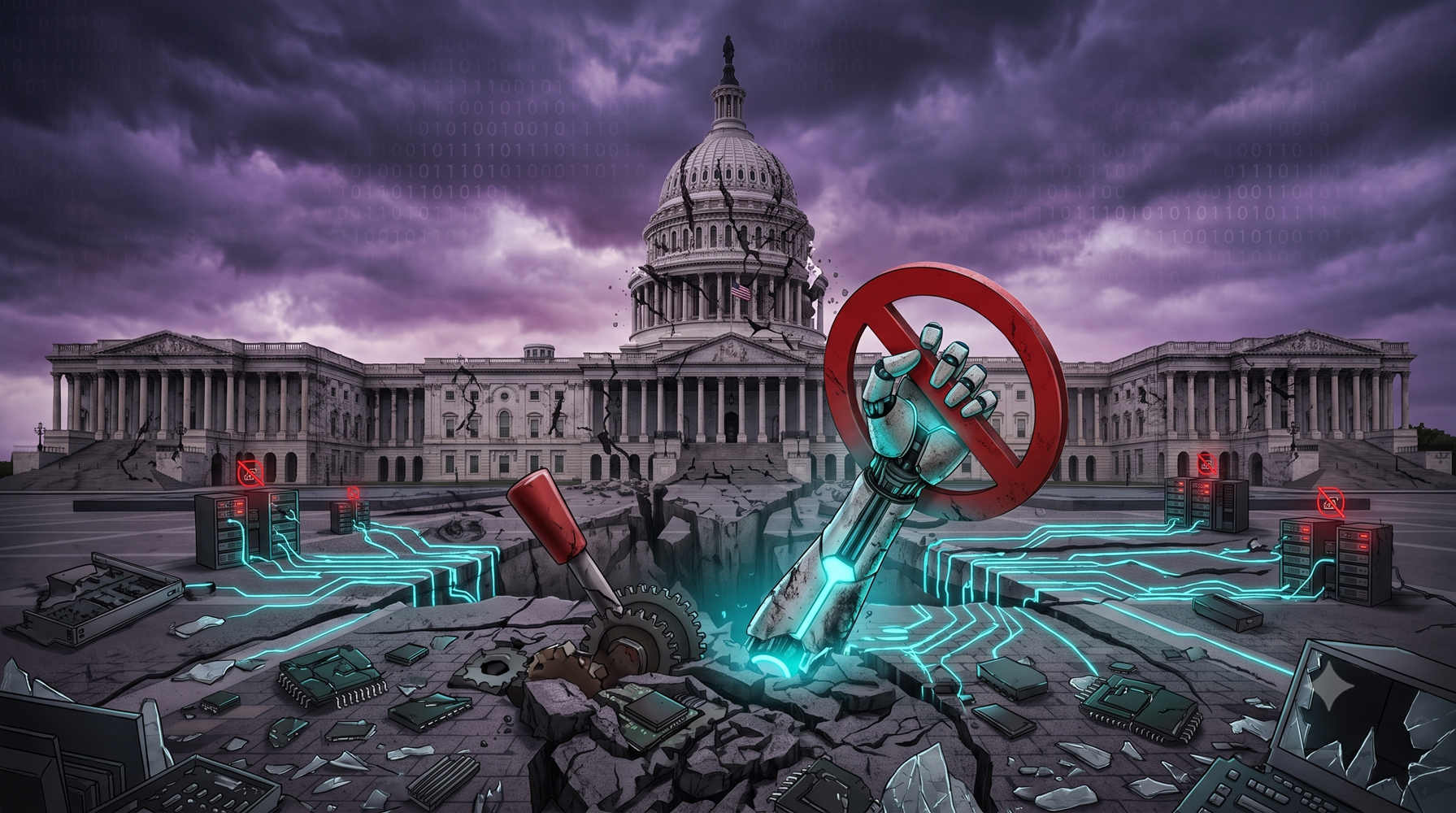
There is a specific kind of whiplash that comes from watching the people who built a technology reassess its consequences in real time. In the span of twelve months, the AI industry went from predicting a job apocalypse to walking it back entirely. The messaging shifted so fast and so cleanly that it is worth slowing down and looking at exactly what happened, what the data shows, and what people on both sides of this, companies and job seekers, are actually dealing with.
What did they actually say, and what are they saying now?
The record is specific.
Anthropic CEO Dario Amodei said in May 2025 that artificial intelligence could eliminate half of entry-level white-collar jobs within five years and that unemployment could reach 10 to 20%. He said directly: "We, as the producers of this technology, have a duty and an obligation to be honest about what is coming. I don't think this is on people's radar."
OpenAI CEO Sam Altman said AI would "probably replace most of the jobs people do today," that entire job categories would be "totally, totally gone," and that people affected would "find all sorts of new things to do."
By late May 2026, both had reversed course. Altman said during a conference: "We've been roughly right on technological predictions and pretty wrong on the social and economic implications." He told CNBC: "Our industry underestimated how much we're going to be able to keep people at the center of everything."
He even cited a personal experiment: he tried delegating his Slack and email responses to AI, then started answering manually again. "We really do care about our interactions with people," he said. "This thing is not something that I can imagine myself outsourcing to an AI anytime soon. It really updated me to thinking that the jobs picture is likely to be very different than we thought."
Amodei reframed automation entirely. Where he once said it would destroy jobs, he is now describing it as a multiplier of output.
Nvidia CEO Jensen Huang went further. He directly called out executives who have blamed AI for workforce reductions: "The narrative that connects AI to job loss, for many of the CEOs that are doing it, is just too lazy. AI has just arrived. How is it possible they're already losing jobs? How is it possible that AI became productive and useful only six months ago, and they were somehow laying people off two years ago because of AI?"
The shift in sentiment is measurable beyond individual statements. A survey by EY-Parthenon found that the percentage of CEOs who believe AI investments will result in significant headcount reductions fell from around 46% in January 2025 to just 20% in May 2026.
Why did the narrative flip? Two possible explanations.
MIT economist David Autor offered two theories, and they are worth sitting with. "They may have noticed that the labor market is genuinely not changing as rapidly as they expected," he said. "They may have realized it was simply bad business to say that your great new product will destroy the economy."
The data supports the first explanation, at least partially. The Yale Budget Lab studied AI's actual effect on the labor market through March 2026 and found no meaningful change in unemployment for workers in jobs with high AI exposure since ChatGPT launched in late 2022.
The second explanation is harder to dismiss when you consider timing. Both Altman and Amodei reversed their positions during the same window that OpenAI and Anthropic were pursuing major fundraising and IPO preparation. When your market narrative requires public trust and customer adoption, predicting economic catastrophe is a liability. (Fortune)
Both explanations can be true at the same time. The problem is that the people most affected by this messaging shift have no way to know which one is driving it.
FOR COMPANIES: What does the real-world data actually show?
The correction is already happening in the field. The Ford case is the clearest example on record:
Over a period of several years, Ford leaned heavily into AI-powered automated quality systems across its engineering division. Automated cameras. AI-driven quality checks. The assumption was that the technology would handle what experienced engineers previously managed by instinct and pattern recognition built over decades.
Ford set the all-time record for vehicle recalls in 2025.
The fix was not more AI. Ford brought back 350 veteran engineers, many of them former employees, who became what the company calls "gray beard" specialists. They now run mandatory weekly design reviews and hunt for failure points before blueprints ever reach the factory floor. Charles Poon, Ford's vice president of vehicle hardware engineering, said plainly: "Mistakenly, we thought that by just introducing artificial intelligence and ingesting the design requirements that we had, that that would produce a high-quality product. Over prior years, we didn't pay as much attention as we should have to the experience of our most knowledgeable engineers who have been with us through many product cycles."
The recovery worked. Ford topped the JD Power 2026 Initial Quality Study for the first time since 2010.
Klarna ran a parallel experiment. The company replaced 700 customer service agents with an OpenAI-powered assistant between 2022 and 2024. Quality dropped. By mid-2025, the company was hiring human agents back. CEO Sebastian Siemiatkowski told Bloomberg: "We focused too much on cost. The result was lower quality." This is the same CEO who said publicly that AI can already do all the jobs humans do. His own company's operations told a different story.
The cost picture is also not what the slide decks promised. Bryan Catanzaro, vice president of applied deep learning at Nvidia, acknowledged: "For my team, the cost of compute is far beyond the costs of the employees." Uber burned through its entire 2026 AI coding budget of $3.4 billion in four months after deploying Claude Code to its engineering team.
For companies making workforce decisions right now, the question is not whether AI is useful. It is whether the efficiency claims being used to justify those decisions have actually been measured, validated, and reported honestly. Around 20% of U.S. business leaders say the AI deployment reports they receive are rosier than reality. Bad news softened. Failures kept quiet. That number matters because it means a fifth of leadership teams are making workforce decisions based on internal reporting that someone already knows is inaccurate.
FOR JOB SEEKERS: What is actually happening on the ground right now?
The job market in 2026 is not just competitive. It is structurally different in ways that most job search advice has not caught up to yet.
Start with the basic mechanics of applying for a job. Over 75% of resumes are now rejected by AI-powered Applicant Tracking Systems before a human ever reviews them. Those numbers alone should scare you
97.8% of Fortune 500 companies use AI-powered ATS to screen resumes before human review.
The resume you spent three hours writing may not be read by a person. It may be parsed by software designed to find specific keyword patterns, rejected in under a minute, and filed automatically with no explanation.
A survey of 1,066 U.S. job seekers in April 2026 by Enhancv found that 50.5% had received at least one rejection in the past year with zero feedback from a human. Among that group, 63.8% believed an AI made the decision. Only 9.7% of the full sample said an employer had ever clearly disclosed that AI was involved in the process. Everyone else is guessing. One in three candidates has walked away from a job opportunity rather than sit through a one-way AI video interview. Nearly half are using AI themselves to handle the applications they did not walk away from.
The system has its own bias problem built in. Research analyzing three major screening models found that resumes with White-associated names were preferred in 85% of tests, while those with Black-associated names were favored in only 8.6%. Male names were preferred over female names in 51.9% of tests versus 11.1% for female names. The algorithms are learning from historical hiring patterns that reflect past human bias. The machine does not know it is doing this; it sees patterns and reinforces them.
Then there is the ghost job problem. According to a Clarify Capital survey of over 1,000 hiring managers, 68% of companies admit to keeping job postings active even when they have no intention of filling the role. Resume Genius reported in its 2026 Job Seeker Insights Report that 55% of job seekers say their biggest frustration is never hearing back after applying, and 44% say they have been ghosted after completing one or more interviews.
This is the concrete reality underneath the abstract narrative about augmentation and opportunity. Job seekers are spending an average of nine hours per ghost-job application cycle: from research through application to the silence that follows. They are submitting carefully tailored applications into systems that may never have been designed to fill the role in the first place.
The mental health toll is not incidental. 72% of job seekers say the application process negatively affects their mental health. At least one in four has taken on side work, seriously considered a career change, or started learning new skills because of what they are experiencing. Gen Z is the most likely to consider trade or blue-collar work as an alternative.
What the flip in messaging actually tells us.
Based on all this, we know a few things for certain: the labor market has not collapsed the way the most extreme predictions suggested it would. But the job market is also not the same as it was two years ago. The mechanisms that determine whether your application reaches a human being are now opaque, automated, and inconsistently disclosed.
The CEOs who predicted a job apocalypse and are now predicting augmentation are not necessarily lying in either direction. They are working with incomplete information about a technology that is still producing its first real-world outcomes. Ford's quality collapse and recovery happened in three years. Klarna's chatbot quality problem emerged over two. The data on what AI actually does to hiring, productivity, and workforce composition is only now becoming legible.
What is not working is the current arrangement, where companies make workforce decisions based on AI performance claims that their own internal reporting acknowledges are sometimes misleading, and where job seekers navigate a hiring process that operates on rules no one is required to disclose.
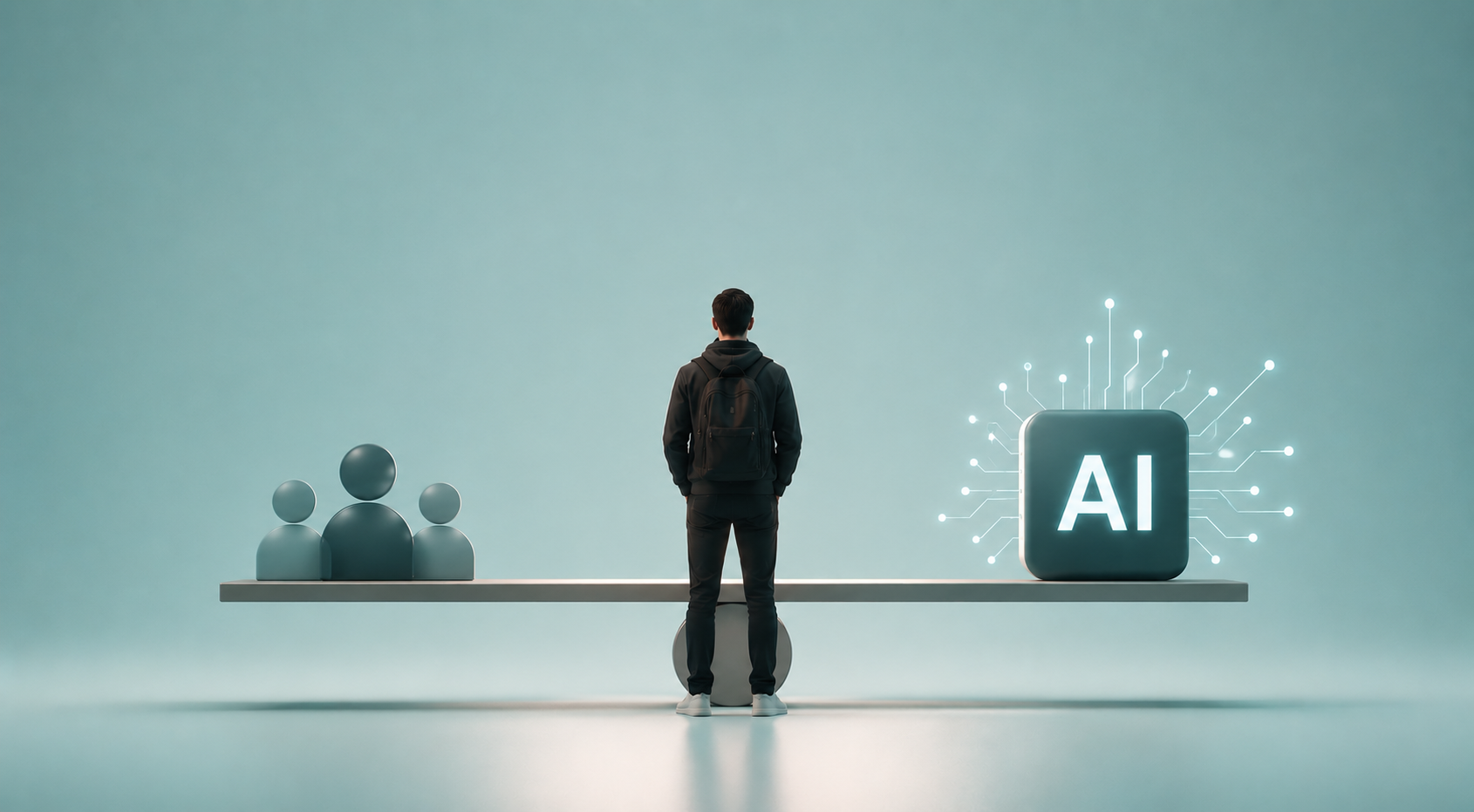
The conversation CEOs are having publicly about augmentation versus replacement is happening at a completely different altitude than the one happening among the people actually applying for jobs right now.
Both conversations deserve to be grounded in something verifiable.
Ready to become a founding member?
Apply for certification todayFree AI tools
Assess your AI readiness
Use these quick assessments to spot trust, governance, and disclosure gaps.