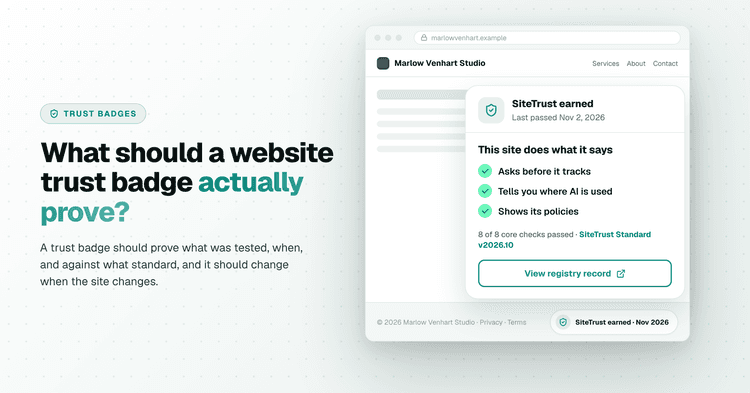
What is your law firm's website doing that you can't see?
Law firm websites run ad pixels, analytics and intake chat like any other business site, but the stakes are higher. Here is what to check, and why it matters for a firm.
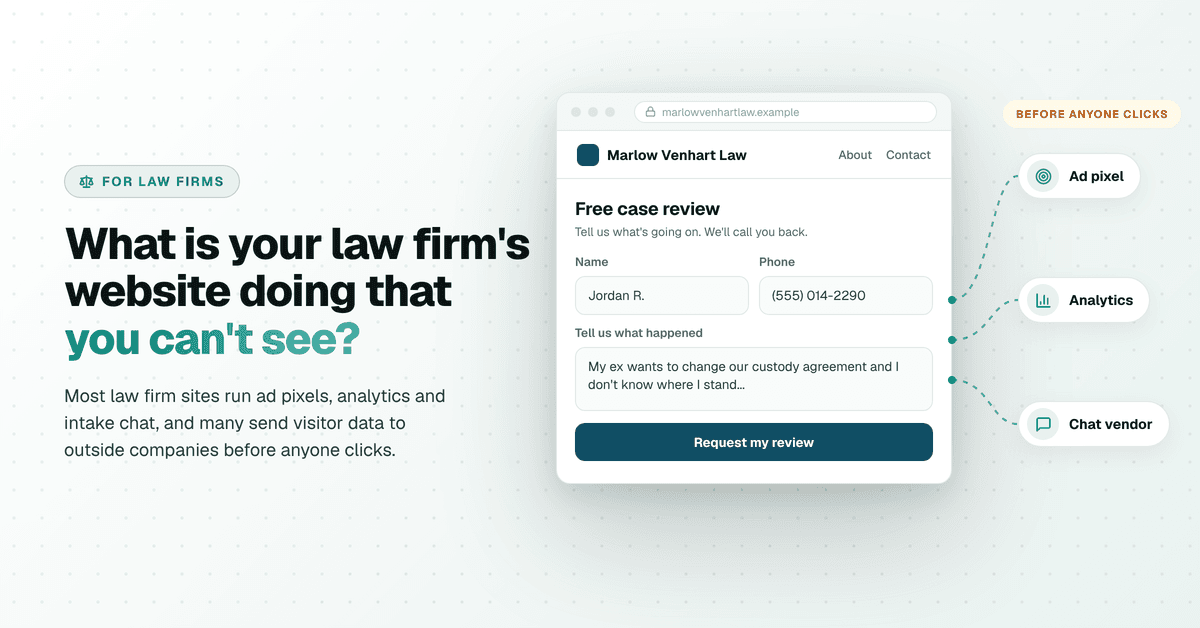
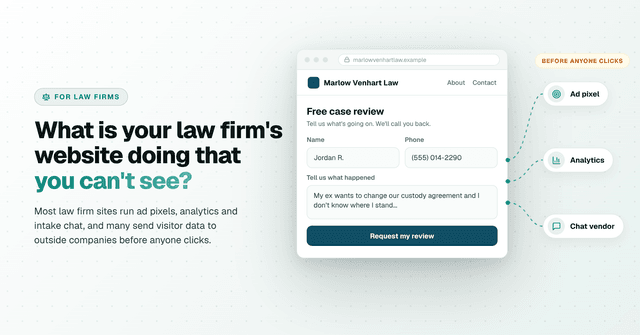
Probably more than you think. Most law firm sites run ad pixels, analytics and intake chat, and many send visitor data to outside companies before anyone clicks. For a firm, that raises two questions at once: the same wiretap exposure every business faces, and what happens to a prospective client's information before they ever become your client.
By Vinnie Fisher, Founder & CEO, SiteTrust · Published November 24, 2026
Why are law firm websites different?
Because the visitor is often in trouble, and they're telling you about it.
A person searching for a divorce lawyer, a defense attorney or an estate planner types things into your site they wouldn't tell most people. They fill out an intake form. They ask your chat window a question. They expect that what they share stays with the firm.
The site, meanwhile, may be running tools your marketing vendor added for ad tracking and analytics. Those tools don't know the difference between a page about parking and a page about a criminal charge.
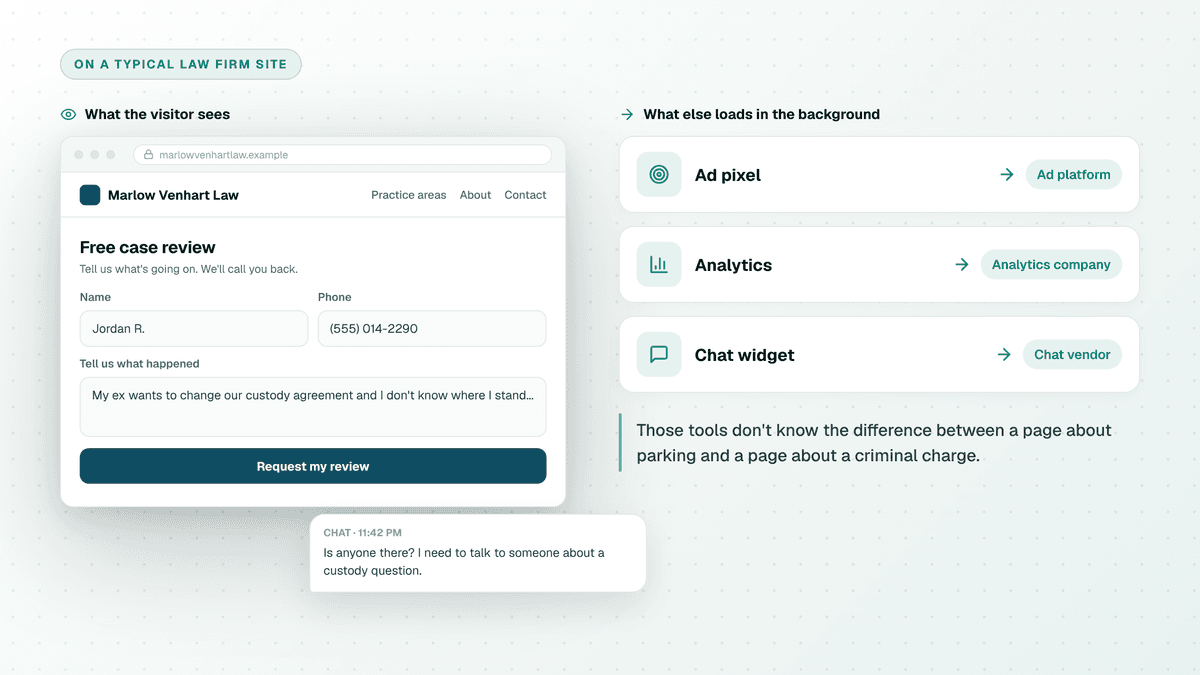
Image 1 (law-firm-website-risks-02-what-loads.png). Alt text: Side by side: what a visitor sees on a law firm site (an intake form and a chat window) and what else loads in the background (an ad pixel, analytics and a chat vendor).
What are the risks a firm should check?
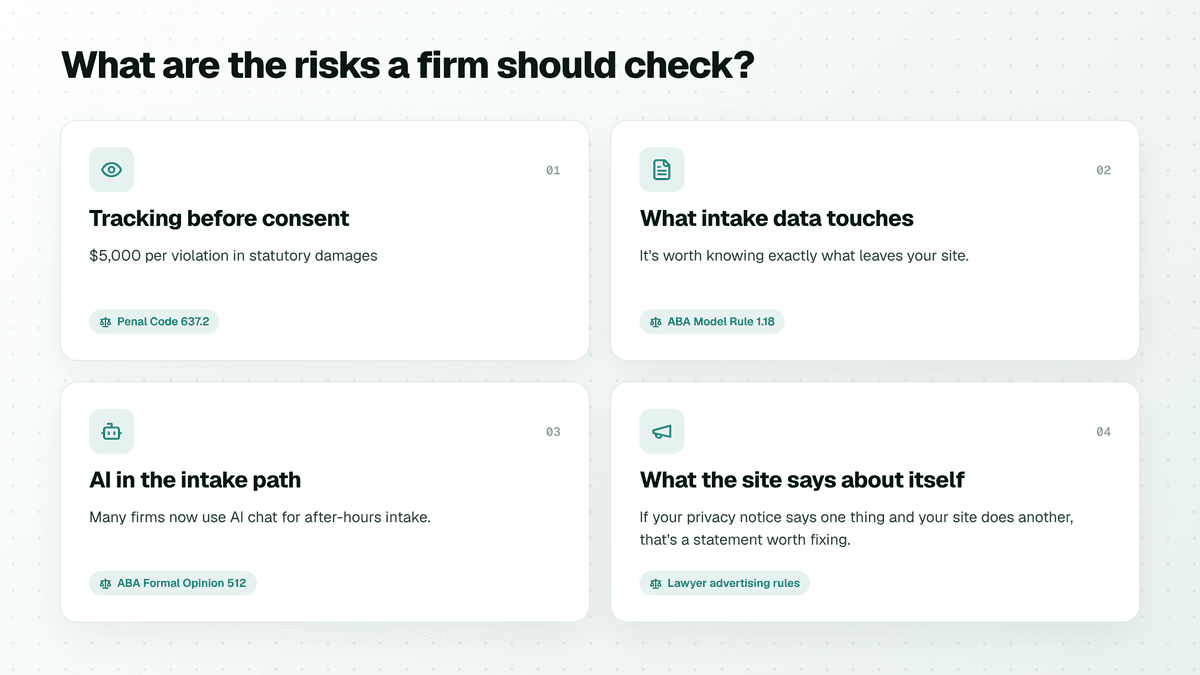
Image 2 (law-firm-website-risks-03-four-risks.png). Alt text: Four cards naming the risks a law firm should check: tracking before consent, what intake data touches, AI in the intake path, and what the site says about itself.
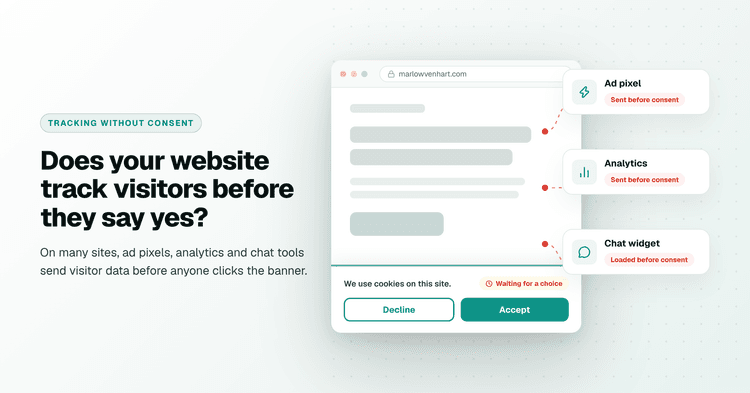
Tracking before consent. In California, plaintiffs' lawyers treat trackers that fire before a visitor agrees as wiretapping, with $5,000 per violation in statutory damages (Penal Code 637.2). Law firms are businesses with websites like any other, and they get the same demand letters.
What intake data touches. If an ad pixel or analytics tool runs on your intake form or the page after it, details about a prospective client may be going to an outside platform. Lawyers owe duties to prospective clients, not just retained ones (ABA Model Rule 1.18). It's worth knowing exactly what leaves your site.
AI in the intake path. Many firms now use AI chat for after-hours intake. ABA Formal Opinion 512 (July 29, 2024) addresses lawyers' use of generative AI, including protecting client information when it goes into an AI tool. A chatbot that sends a prospective client's story to an AI vendor raises the same questions. And California has had a bot disclosure law since 2019.
What the site says about itself. Your website is a communication about your services, and the rules on lawyer advertising apply to it. If your privacy notice says one thing and your site does another, that's a statement worth fixing.
"Our marketing company handles the website."
They probably do, and they probably added the tools. But the exposure, and the duty, sit with the firm.
I've been a business attorney since 1999. The question that matters hasn't changed: what did you say, and what did you actually do? Your website answers that question every day.
How do you check your firm's site?
You don't need to read code. Start with these:
→ List what loads. Which pixels, analytics and chat tools run on your site, and who added each one?
→ Check the intake path. Does anything track or send data on the intake form or the thank-you page?
→ Test the banner. Does anything fire before a visitor says yes? Does "decline" stop it?
→ Ask about the chat. Does it say it's automated? Where do the conversations go, and does the vendor keep them?
→ Match the notice to the site. Does your privacy notice describe what actually happens?
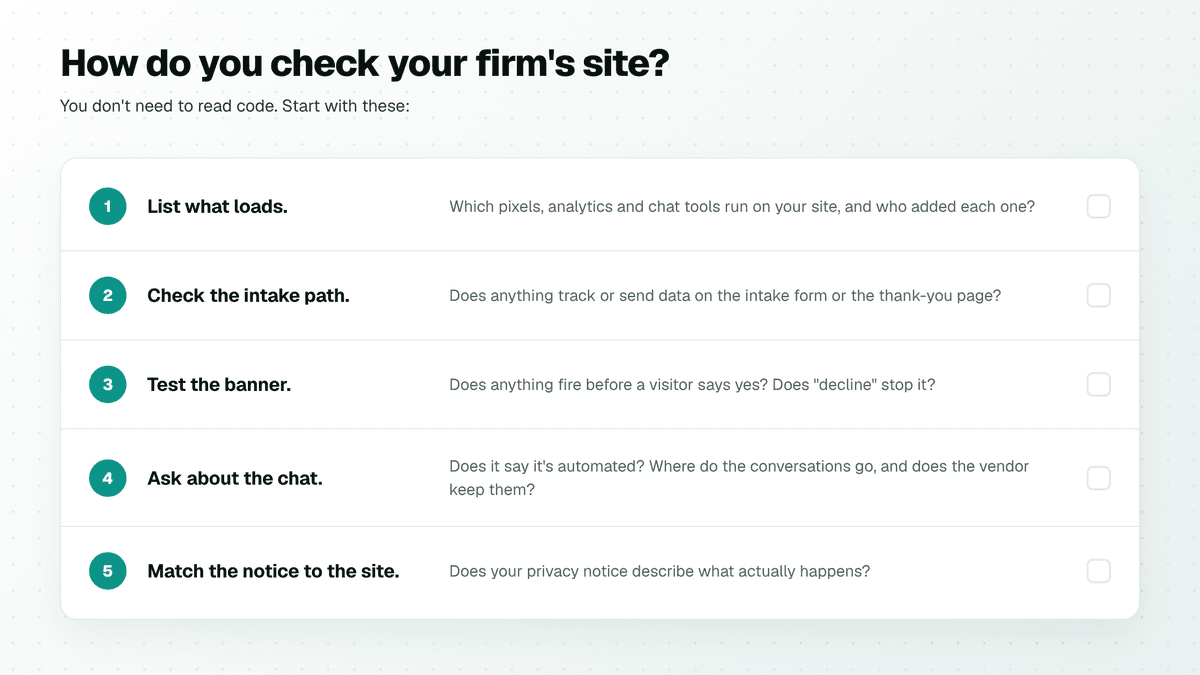
Image 3 (law-firm-website-risks-04-checklist.png). Alt text: A five-step checklist: list what loads, check the intake path, test the banner, ask about the chat, match the notice to the site.
The free SiteTrust Scan checks your site from the outside: what loads, what fires before consent, and what happens after a visitor accepts or declines. You get a dated summary of what we found.
What does "handled" look like?
Trackers wait for a yes. Nothing runs on the intake path that you haven't chosen. The chat says it's a bot, and you know where conversations go. Your privacy notice matches your site. And if a client, a bar regulator or opposing counsel ever asks how your site treats visitors, you have a dated record to show them.
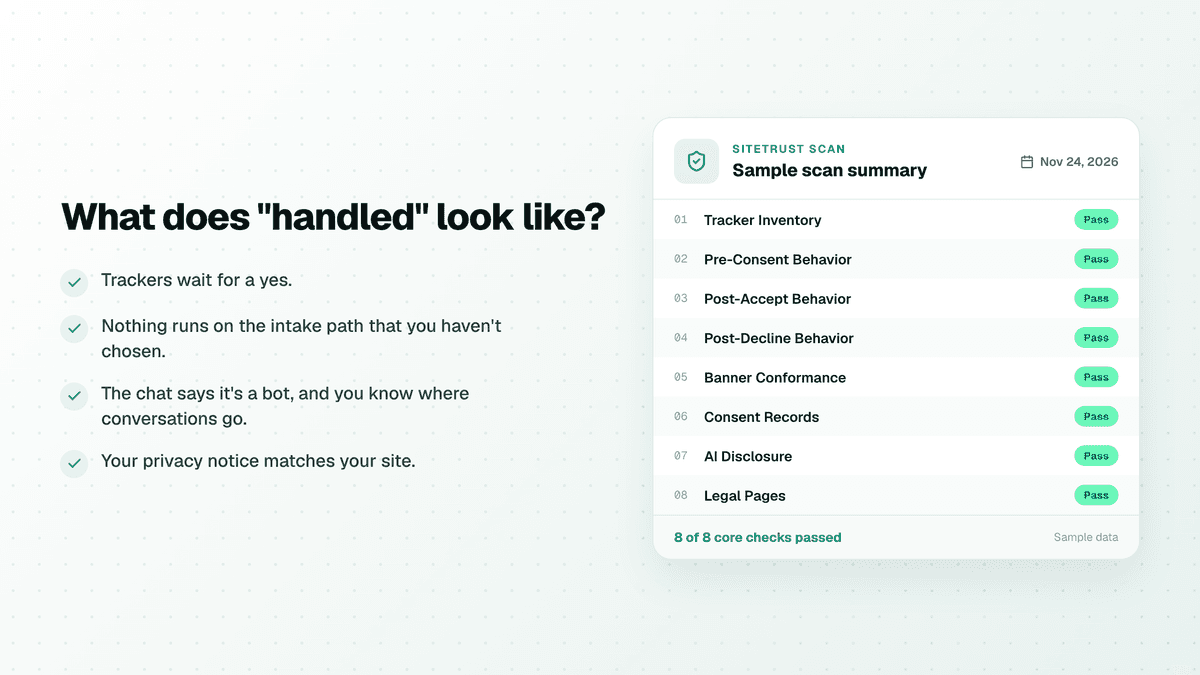
Image 6 (law-firm-website-risks-05-handled.png). Alt text: What handled looks like: trackers wait for a yes, the chat says it's a bot, the privacy notice matches the site, next to a sample dated scan summary with passing checks.
FAQ
Does our website create an ethics problem for the firm? We can't answer that, and no tool can. That's a judgment for you and, if needed, ethics counsel. What we can show is what your site actually does, on a date, so you're deciding from facts.
We're a small firm. Does this really apply to us? Yes. The tools that create the exposure are the same ones small firms use: an ad pixel, analytics, a chat widget. Demand letters don't check firm size first.
Can we keep running ads? Yes. The question is how the tracking runs, not whether you advertise. Ads can run with tracking that waits for consent.
Who should own this at the firm? A partner, not just the marketing vendor. The vendor can make the fixes. The firm carries the duty.
Run the free scan
See what your firm's site does before a visitor says yes. Run the free scan at sitetrust.com
Hidden risks, handled. SiteTrust, earned. What remains, covered.
Informational only and not legal advice. Sources: California Penal Code 637.2; ABA Model Rule of Professional Conduct 1.18; ABA Formal Opinion 512, Generative Artificial Intelligence Tools, July 29, 2024; California Business and Professions Code 17940 to 17943.
Image guide
Ready to become a founding member?
Apply for certification todayFree AI tools
Assess your AI readiness
Use these quick assessments to spot trust, governance, and disclosure gaps.